
What Happens When a Welder Meets a Robot?
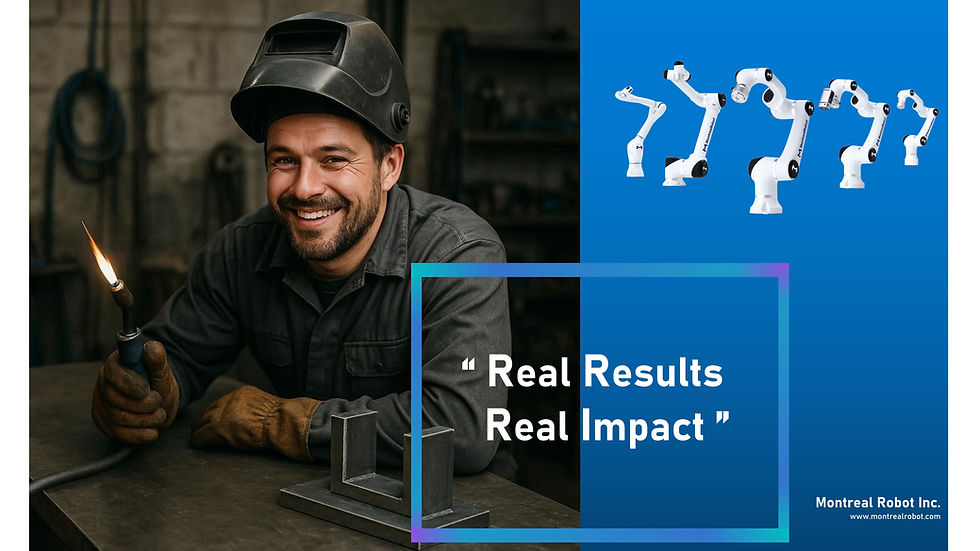
It usually starts with hesitation.
A seasoned welder crosses his arms, watching a new cobot roll onto the shop floor. “Is this thing here to replace me?” he asks with a half-smile, half-frown.
The air is thick with doubt. Welding isn’t just about joining metal—it’s about skill, instinct, and years of practice. Could a robot really understand that?
But within a few days, the shop begins to notice something unexpected.
The cobot isn’t here to steal jobs. It’s here to take on the tedious, repetitive welds—the long stretches of work that strain backs, fatigue hands, and test patience. The cobot runs bead after bead with unshakable consistency, never tired, never distracted.
And the welder? He finds himself with time again—to tackle the tricky angles, the fine finishes, the creative challenges that make welding a craft instead of just a job.
Suddenly, the dynamic on the shop floor changes.
The welder and the cobot aren’t rivals. They’re partners.
This story isn’t fiction—it’s happening right now in small and medium-sized welding shops across North America.
SMEs have always carried the weight of doing more with less. Orders pile up. Skilled welders are harder to find. Bigger competitors loom with more resources. For many shop owners, it feels like the gap is widening.
That’s where cobot-integrated solutions step in as the great equalizer.
With cobots, a two-person team can feel like a crew of five. A small shop can say “yes” to contracts they used to turn down. Knowledge doesn’t walk out the door when senior welders retire—it gets captured, standardized, and preserved in the cobot’s programming.
The best part? Unlike traditional automation, cobots are approachable. They don’t need a massive overhaul of the factory floor. They’re cost-effective, adaptable, and safe to work right alongside people.
Think of it this way: cobots aren’t here to change what welding is. They’re here to change how welding gets done.
At Montreal Robot, we’ve seen it firsthand. The hesitation, the curiosity, and then—the transformation. Welding shops that once felt limited by size or workforce suddenly discover new possibilities:
Production runs that scale smoothly.
Skilled workers who stay longer because their jobs are less exhausting.
Clients who notice the difference in quality and speed.
And perhaps most importantly, a renewed sense of pride on the shop floor—because technology isn’t erasing craftsmanship, it’s protecting it.
The welder who once frowned at the cobot? He smiles now when it sparks to life.
Not competition.
Not replacement.
Collaboration.
That’s the story worth telling—and the future worth building.


Comments